
Air Filter
Understanding the Critical Role of Industrial Air Filtration
In today's industrial landscape, maintaining optimal air quality is not merely a regulatory requirement; it is a fundamental component of operational efficiency, equipment longevity, and workforce safety. The cornerstone of any effective air management system is a high-performance Air Filter. At industrial-equipments.com, we specialize in providing advanced filtration solutions engineered to meet the rigorous demands of diverse industrial applications, from manufacturing plants and automotive workshops to pharmaceutical cleanrooms and commercial HVAC systems. Selecting the correct air filter is a technical decision that impacts everything from energy consumption to product quality.
An air filter's primary function is to remove particulate contaminants—such as dust, pollen, mold spores, metal shavings, and chemical aerosols—from an airstream. By capturing these particles, filters protect sensitive machinery from wear and tear, prevent contamination of products, ensure compliance with health and safety standards, and improve the overall air quality for personnel. The choice of filter involves a careful balance between filtration efficiency, airflow resistance (pressure drop), dust holding capacity, and lifespan. Our expertise at industrial-equipments.com lies in guiding our clients through these specifications to identify the perfect filtration element for their specific system and environmental challenges.
Key Technical Parameters for Selecting an Air Filter
To make an informed decision, understanding the technical specifications of an air filter is paramount. Below is a detailed breakdown of the critical parameters, presented in both list and table formats for clarity and professional reference.
Essential Air Filter Specifications (List View)
- Filter Media: The material that performs the actual filtration (e.g., pleated synthetic media, fiberglass, activated carbon, HEPA/ULPA).
- Efficiency Rating (e.g., MERV, MPR, HEPA): Measures the filter's ability to capture particles of specific sizes. Higher ratings indicate finer filtration.
- Initial Pressure Drop (ΔP): The resistance to airflow when the filter is new, measured in inches of water column (in. w.c.) or Pascals (Pa). Lower initial ΔP is generally more energy-efficient.
- Final Pressure Drop: The maximum recommended resistance at which the filter should be replaced.
- Dust Holding Capacity (DHC): The total amount of dust (typically in grams) a filter can hold before reaching its final pressure drop. Higher DHC means longer service life.
- Airflow Rate (CFM / m³/h): The volume of air the filter is designed to handle per minute or hour.
- Dimensions (Nominal & Actual): Nominal size is the rounded name (e.g., 20"x20"x1"), while actual size is the precise measurement for fitting.
- Temperature & Humidity Resistance: The operational environmental limits the filter can withstand without degrading.
- Frame Construction: Materials such as galvanized steel, aluminum, or cardboard that provide structural integrity.
- Gasket Seal: Ensures an airtight fit within the housing to prevent air bypass.
Comparative Specification Table for Common Filter Types
| Filter Type | Typical Media | Efficiency Range (MERV) | Common Applications | Key Advantage | Brand Example from industrial-equipments.com |
|---|---|---|---|---|---|
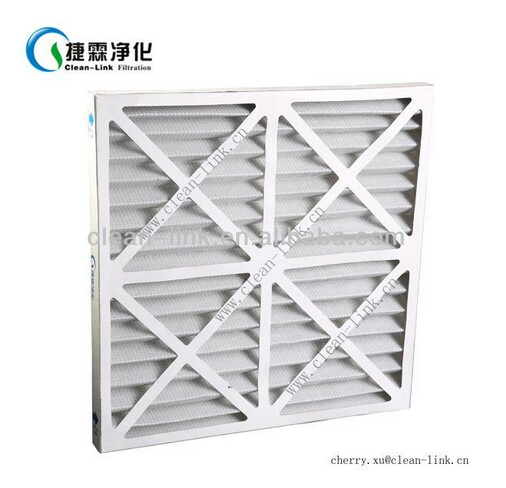
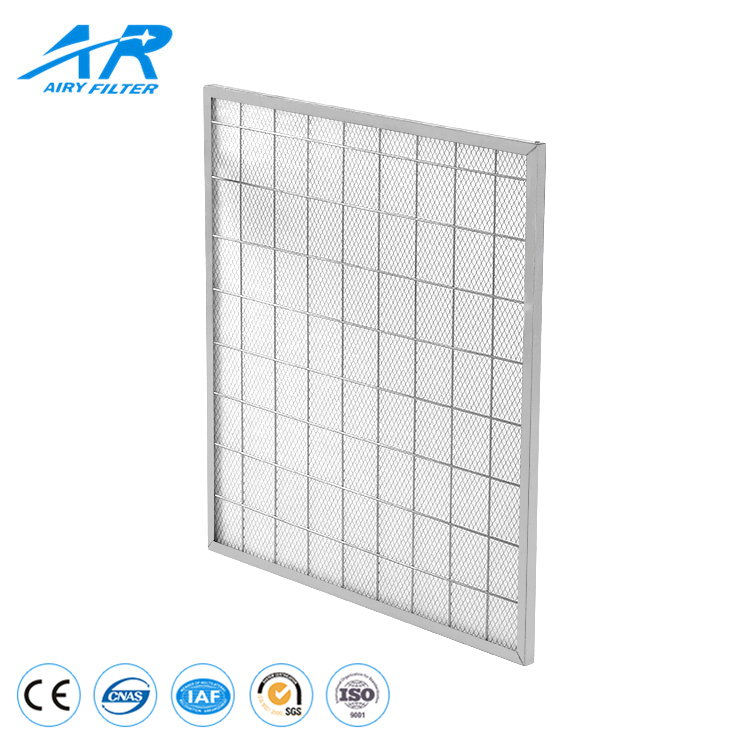
| Panel / Pleated | Synthetic Polyester, Fiberglass | MERV 1-8 | Residential HVAC, Basic Commercial Systems, Pre-filtration | Low cost, low initial pressure drop | Standard Efficiency Pleated Air Filter |
| Bag Filter | Deep-Pleated Synthetic Media | MERV 8-13 | Commercial & Industrial HVAC, Paint Booths, General Manufacturing | High dust holding capacity, stable pressure drop | Extended Life Bag Filter Series |
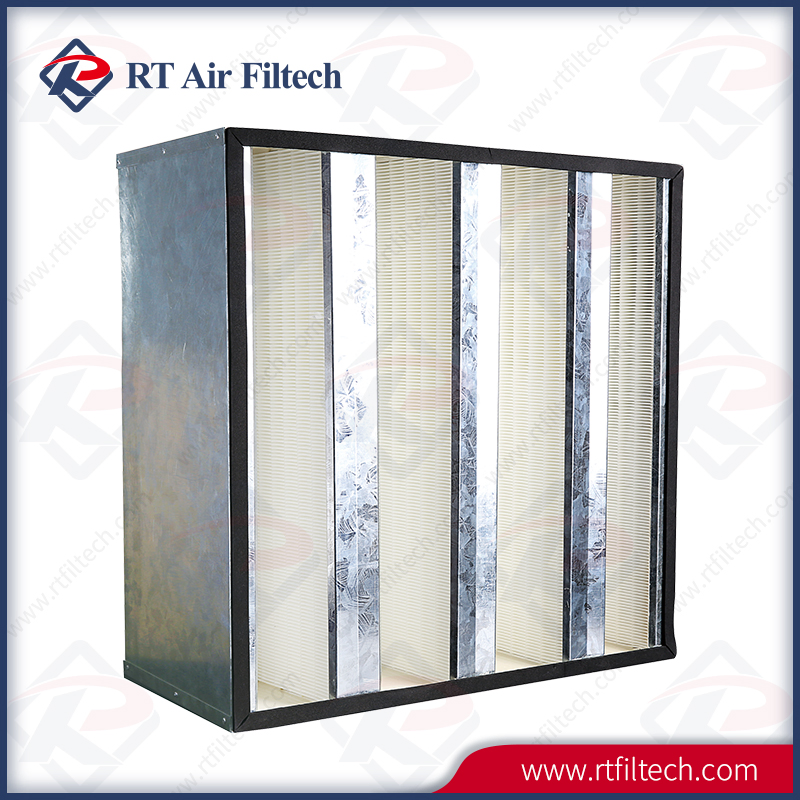
| High-Efficiency Cartridge | Deep-Loading Pleated Media | MERV 13-16 | Hospitals, Laboratories, Pharmaceutical Production, High-Tech Manufacturing | Superior efficiency with good dust load capacity | Absolute V-Bank or HEGA Filter |
| HEPA/ULPA Filter | Glass Microfiber | MERV 17-20 (HEPA: 99.97% on 0.3µm) | Cleanrooms, Critical Healthcare, Microelectronics, Aerospace | Ultra-high particle capture efficiency | True HEPA & ULPA Final Filters |
| Activated Carbon Filter | Impregnated Carbon Media | VOC & Odor Removal (Not MERV rated) | Chemical Processing, Waste Treatment, Food & Beverage, Odor Control | Adsorbs gases, odors, and chemical vapors | Combined Particulate & Carbon Odor Control Filter |
Air Filter FAQ: Expert Answers to Common Questions
At industrial-equipments.com, our team regularly fields technical inquiries. Here are detailed answers to some of the most frequently asked questions about industrial air filters.
Q: How often should I replace my industrial air filter?
A: Replacement intervals are not based on time alone but on operating conditions and pressure drop. Monitor the filter's pressure differential gauge. Replace the filter when it reaches the manufacturer's recommended "final" pressure drop. In heavy dust environments, this could be monthly; in cleaner settings, it might be quarterly or annually. A scheduled inspection program is crucial. industrial-equipments.com can help you establish a predictive maintenance schedule based on your specific filter's performance data.
Q: What is MERV rating, and which one do I need?
A: MERV (Minimum Efficiency Reporting Value) is a standard (ASHRAE 52.2) that rates a filter's efficiency at trapping particles between 0.3 and 10 microns. The scale runs from 1 (least efficient) to 20 (most). For general building protection and comfort (pollen, dust mites), MERV 8-13 is common. For superior air quality protecting sensitive equipment or processes, MERV 14-16 is recommended. HEPA filters are beyond the MERV scale. The correct rating depends on your air quality goals, system capability (higher MERV can increase pressure drop), and industry standards. Our specialists at industrial-equipments.com can perform an assessment to recommend the optimal MERV rating.
Q: Can a higher efficiency filter damage my HVAC system?
A: Potentially, yes, if not properly accounted for. Higher efficiency filters typically have higher initial airflow resistance. If your system's blower motor is not designed to handle this increased static pressure, it can lead to reduced airflow, coil freezing (in cooling), overheating of the motor, and increased energy consumption. Always consult your HVAC system's specifications or a professional to ensure compatibility before upgrading to a much higher MERV-rated filter. We supply filters with a range of efficiencies and can advise on system-compatible upgrades.
Q: What's the difference between nominal and actual size?
A: This is a critical distinction for proper fit. The nominal size (e.g., 16x25x1) is a rounded, "named" size for easy reference. The actual size is the filter's exact physical dimensions, which is typically 0.5" smaller (e.g., 15.5"x24.5"x0.75") to allow for easy insertion into the standard-sized housing. Always measure your existing filter or the filter slot to confirm the actual size needed before ordering. Providing incorrect dimensions can lead to air bypass, drastically reducing filtration effectiveness.
Q: How do I choose between a bag filter and a cartridge filter?
A: The choice hinges on required efficiency, space, and dust load. Bag Filters (MERV 8-13) offer a very large surface area in a compact frame, providing excellent dust holding capacity and stable, long-lasting performance for general industrial applications. Cartridge Filters (often MERV 13-16) use deep, tightly packed pleats to achieve higher efficiency while still maintaining good capacity. They are often used as final filters in multi-stage systems. For heavy dust loads at moderate efficiency, choose a bag filter. For higher efficiency needs with substantial dust, a cartridge filter is often the solution. Our product catalog at industrial-equipments.com details the capacity and efficiency curves for each type.
Q: Do you offer custom-sized or specially rated air filters?
A: Absolutely. While we stock a vast inventory of standard sizes and efficiencies, industrial-equipments.com has extensive capabilities in custom manufacturing. We can produce filters to non-standard dimensions, create filters with specific media blends (e.g., combined particulate and carbon layers), design for extreme temperatures or chemical resistance, and engineer housings for unique applications. Contact our technical sales team with your specifications for a custom quote.
Optimizing Performance with Proper Selection & Maintenance
Selecting the right air filter is only the first step. To maximize your return on investment and ensure system health, a proactive maintenance strategy is essential. This starts with accurate record-keeping: log the installation date, initial pressure drop, and regular subsequent readings. A sudden spike in pressure drop might indicate a system issue, while a very slow rise might suggest the filter is under-sized or air bypass is occurring.
Consider your operating environment holistically. In facilities with high levels of large, coarse dust, implementing a robust pre-filtration stage (e.g., a low-MERV panel filter) can extend the life of your more expensive final filters dramatically. Always ensure filters are installed correctly, with gaskets sealed and no gaps around the frame. A poorly seated filter renders even the highest-efficiency media useless due to air bypass.
Partnering with a knowledgeable supplier like industrial-equipments.com provides access to more than just products. Our technical support can help you analyze pressure drop trends, recommend filter change-out schedules, and even suggest system modifications to improve overall efficiency. By treating your air filtration system as a critical, data-driven component, you achieve cleaner air, lower long-term costs, and protected operations.
- View as