
China PPGI: Your Ultimate Guide to Pre-Painted Steel Coils
2026-11-02
China dominates the global PPGI market, but not every coil lives up to the promise. Whether you're roofing a warehouse or cladding a facade, the wrong pre-painted steel can fade, peel, or corrode faster than expected. That's where experience counts. LANYUN has spent years refining what goes into every coil—from primer adhesion to topcoat durability. In this guide, we'll walk through the key factors that separate premium PPGI from the rest, so your next project doesn't become a costly lesson.
What Actually Happens When Steel Gets Pre-Painted
Pre-painting steel is not just a cosmetic step squeezed in before shipping. It's a carefully choreographed sequence where the metal surface is chemically altered and physically layered to accept and hold a coating that must survive bending, cutting, and decades of weather. First, the steel strip passes through a series of alkaline baths and rinses that strip away mill oils and rust preventatives. Then comes the conversion coating — typically a zinc phosphate or thin-film chromium treatment — which etches the surface at a microscopic level. This isn't a passive primer; it creates a crystalline structure that gives the later paint something to grip onto, much like how a keyed wall helps plaster adhere.
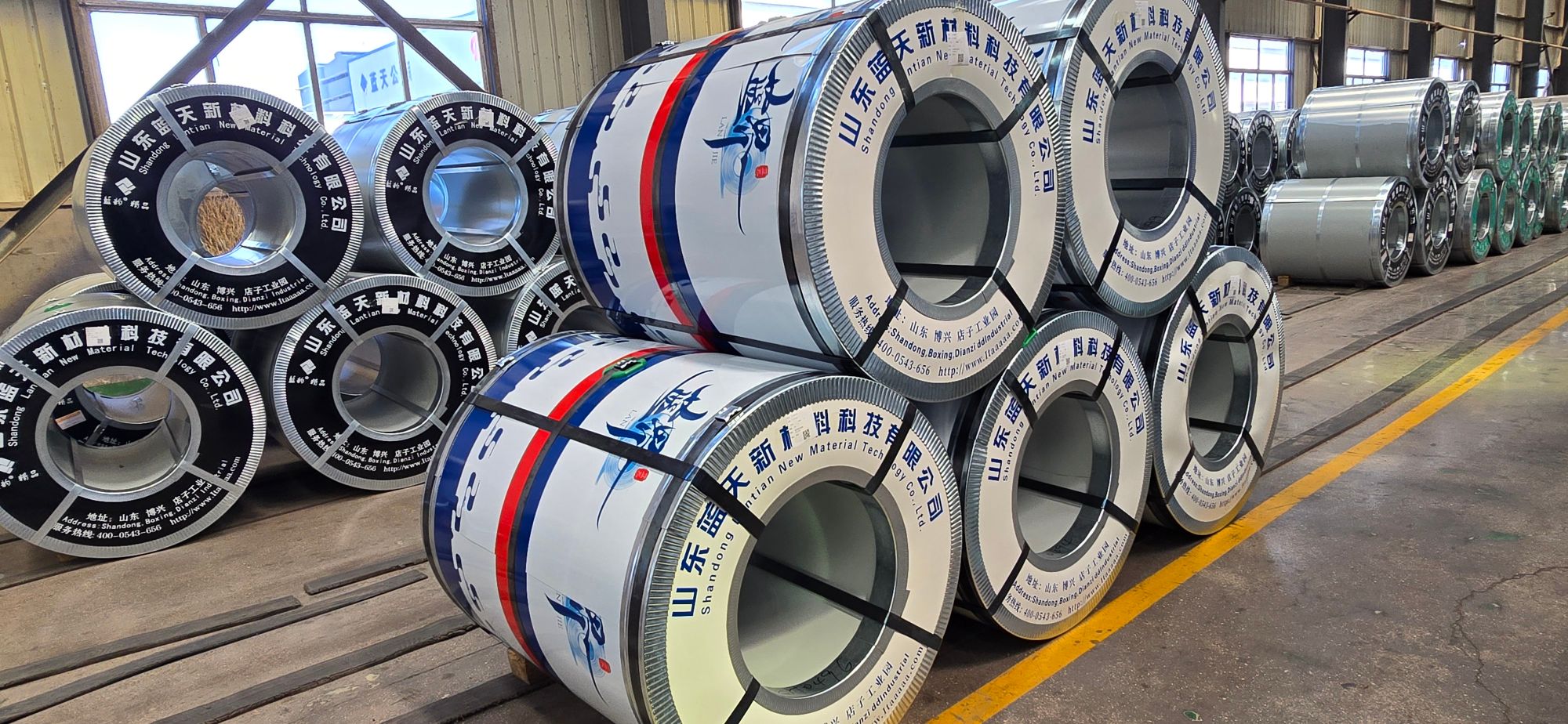
The actual paint application happens at high speed, often on a continuous coil line moving at over 100 meters per minute. A primer coat goes down first, usually an epoxy or polyurethane, blocked with anti-corrosive pigments. Then a topcoat of polyester, silicone-modified polyester, or PVDF is rolled on using reverse roller coaters that deposit a controlled film thickness measured in microns. Each coating is cured in an oven reaching 200–250°C, where the resin cross-links and hardens. The metal web never stops; it exits the oven, passes through a water quench to cool, and is re-coiled without ever touching a human hand.
What makes pre-painted steel distinct from post-painted steel is that all forming happens after the coating is fully cured. Bends, folds, and roll-forming put stress on the paint film, so the primer and topcoat are formulated with enough flexibility to stretch without cracking. Adhesion is also tested aggressively — crosshatch cuts, impact tests, and salt spray cabinets verify that the coating won't peel away from the zinc layer. This is why a pre-painted roof panel can be sheared and punched on site without edge rust creeping under the paint. The finish isn't just sitting on the surface; it's chemically bonded and mechanically interlocked with the steel itself.
The Chinese Advantage: Speed, Scale, and Surprising Quality
When a product idea lands on a designer's desk in Shenzhen, it can be on a factory line within days—not weeks. That speed isn't about cutting corners; it's about a tightly woven ecosystem where component suppliers, mold makers, and assembly teams operate within the same industrial clusters. You can walk from a prototyping shop to a PCB fabricator in twenty minutes, get instant feedback on manufacturability, and adjust tolerances on the spot. For a startup or a mid-sized brand, this kind of rapid iteration means you can test, fail, and refine faster than almost anywhere else on the planet.
Scale is the second pillar. Chinese factories don't just handle large orders—they actively prefer them, and their infrastructure is built for it. A mid-level electronics plant can shift from making 500 units to 50,000 units in the same quarter without dramatic retooling delays. Labor, machinery, and supply chains are elastic in a way that other manufacturing hubs struggle to match. This isn't just about quantity; it's about the ability to scale without sacrificing consistency, because the same engineers who set up the pilot run often stay involved as volume ramps up.
What surprises many first-time buyers is the quality floor. Yes, there's still cheap, throwaway plastic if you want it, but the baseline has moved significantly upward. Factories that once produced only for export now operate under strict internal QA protocols, and many have earned certifications that require annual audits. The real advantage is breadth: you can find a supplier making aerospace-grade aluminum parts next to one producing high-tolerance injection molds, both using the same quality-management language. The trick is knowing how to specify exactly what you need—and in that, the ecosystem itself becomes a teacher.
How Coating Choices Affect Lifespan (and Your Budget)
The type of coating you select does more than change how your surface looks—it directly influences how long that surface will hold up before needing repair or replacement. High-build epoxy coatings, for instance, create a thick, impact-resistant layer that can shrug off heavy foot traffic and dropped tools for a decade or more. Cheaper acrylic or latex paints might look fine on day one, but they wear thin quickly in busy areas, forcing you to recoat every two to three years. That shorter cycle isn't just an inconvenience; it means paying for surface prep, labor, and materials all over again.
Then there's the environmental factor. A UV-stable polyurethane or polyaspartic coating preserves its gloss and color under harsh sunlight, while an unmodified epoxy will chalk and yellow within months outdoors. Choosing the wrong chemistry for the conditions leads to premature degradation—and a budget hit you didn't plan for. Corrosion-resistant zinc-rich primers, for example, cost more up front but protect steel structures from rust for decades, whereas a standard alkyd primer fails early in coastal or industrial settings.
Smart coating choices also consider maintenance access. If recoating means shutting down a production line or closing a retail floor, a premium coating that lasts twice as long often pays for itself in avoided downtime alone. The key is matching the coating's performance profile—abrasion resistance, chemical tolerance, flexibility, UV stability—to the specific stresses your surface will face. A slightly higher material cost now can easily save you two or three full recoating cycles over the next ten years.
Beyond Basic White: The Color and Texture Spectrum in PPGI
The notion that pre-painted galvanized steel must default to bright white or light gray misses a large part of what modern coil coating can achieve. Today's PPGI lines run deep burgundies, forest greens, slate blues, and warm earthy terracottas with the same corrosion resistance and weatherability as their paler counterparts. Pigment systems have matured to the point where intense colors hold their depth for years under UV exposure, and metallic or pearlescent flakes can be added without compromising the bond between paint and zinc layer.
Texture plays an equally important role in moving beyond flat, utilitarian surfaces. Embossed profiles that mimic wood grain, rough sand finishes, fine stucco patterns, or subtle leather-like undulations change how light behaves across a panel. These tactile surfaces mask small scratches and fingerprint marks more effectively than high-gloss smooth coats, which reduces visible maintenance on building exteriors and appliance housings. A matte or low-sheen option also softens the industrial feel of steel, making it more acceptable in residential and retail settings.
The expanded spectrum of color and texture lets architects and product designers treat PPGI as a design material rather than a mere substrate. A single building can combine a deep bronze textured panel with a smooth off-white accent wall, or a warehouse can adopt corporate brand hues without needing post-installation painting. The combination of hue, gloss level, and surface relief opens up customization that goes well beyond basic white, all while preserving the cost and longevity benefits of factory-applied finishes.
Real-World PPGI: From Factory Roofs to Home Appliances
Walk through any industrial park and the first thing you notice isn't the machinery—it's the color. Pre-painted galvanized iron shows up on factory roofs in faded blues, deep reds, even the occasional olive green, each panel shaped to shed rain and snow while holding its tint for decades. The coating isn't just decorative; it's a barrier that keeps the zinc layer intact, which in turn protects the steel core from rust. On a metal building, that means less upkeep and fewer replacement cycles than bare galvanized sheet.
Step inside a kitchen, though, and the same material takes a quieter role. Washing machine bodies, refrigerator side panels, the back of a microwave—they all lean on PPGI for the same reason the factory roof does: the paint adheres to a galvanized substrate that resists corrosion from humidity, spills, and constant handling. Appliance makers often pick lighter gauges and smoother finishes, but the core idea doesn't change. One coil of coated steel can end up as a roof panel in one facility and a dryer drum housing in another, simply by adjusting the thickness and the shade.
Reading the Fine Print: What Smart Buyers Demand from Chinese Mills
The real negotiation starts after the price is agreed. Smart buyers don’t just glance at the offer sheet—they pull apart the mill certificates, traceability records, and third-party test reports line by line. A Chinese mill might quote “equivalent” grade steel, but exact chemical composition, yield strength, and elongation values are what determine whether a beam holds or a coil splits. Buyers who skip this step often discover later that in-house lab results conveniently match the spec, while independent sampling tells a different story.
The fine print in contracts is where hidden costs hide. Savvy buyers fight over theoretical versus actual weight calculations, because a two percent rolling margin on a thousand tonnes isn’t pocket change. They insist on tolerance allowances that match the end use, not the mill’s default. Packaging and rust prevention clauses get just as much attention—cheap edge protection or flimsy strapping can turn a bargain into a claim. Payment terms shift from full T/T upfront to a letter of credit at sight with inspection rights, and late shipment penalties get tied to actual losses, not vague “reasonable efforts.”
Beyond the product, compliance is the real battlefield. A smart buyer verifies that a CE mark or ASTM stamp isn’t just a sticker but backed by current, audit-ready documentation. They ask for advance notice of any production line changes or raw material substitutions, and they reject “silent” deviations. Warranty language needs a clear trigger and a defined resolution window—thirty days for acknowledgement, ninety for replacement or credit. Mills that resist these clauses usually have a reason, and that reason is exactly why the fine print matters.
FAQ
PPGI uses a galvanized base layer, while PPGL adds a thicker aluminum-zinc coating. In coastal or high-humidity areas, PPGL generally resists corrosion longer, though a well-made PPGI with the right primer and topcoat can still perform fine for inland roofing and cladding.
Most reputable mills run a chromate or chrome-free pre-treatment line before painting, then apply primer and topcoat in a continuous roll-coating process. Adhesion is checked with bend tests and cross-hatch tests on samples from each batch. Buyers should ask for those test reports rather than only relying on visual inspection.
Common thickness ranges from 0.12 mm to 1.5 mm, with widths typically between 600 mm and 1,250 mm. Some mills can slit down to narrower sizes if the order volume justifies the extra setup. For roofing sheets, 0.35-0.50 mm is the most frequently ordered range.
Yes, custom colors are possible but usually require a minimum order quantity, often around 25-50 metric tons per color. Small trial orders may be limited to stock colors like RAL 9002, RAL 5010, or standard blue and red. Textured finishes, matte surfaces, and printed wood or stone effects are also available from larger mills.
Look for the base metal grade, zinc or aluminum-zinc coating weight in g/m², paint type and thickness on both sides, and the results of impact, bending, and salt spray tests. The certificate should also include coil number, production date, and the inspector's signature or stamp. Missing any of these fields often signals a trading company repackaging stock coils.
Prices are typically quoted per metric ton on an FOB or CFR basis, with the paint system and coating weight specified. The base hot-dip galvanized or galvalume substrate price moves with steel futures, while paint thickness and special topcoats add a fixed surcharge. For a rough comparison, always ask for the same zinc coating and paint thickness, otherwise quotes can vary by $30-50 per ton just on specifications.
Coils are usually wrapped with waterproof paper and an inner metal ring, then covered with galvanized steel or tinplate outer wraps and secured with steel straps. Edge protectors are added to prevent dents. For long-distance ocean freight, some buyers also request a wooden pallet base or an extra layer of plastic film to reduce moisture damage.
Yes, especially for first-time orders. Inspection agencies check coil weight, thickness, paint adhesion, coating mass, and surface defects at the factory or warehouse before loading. The cost is usually a few hundred dollars per day, and many buyers consider it cheaper than dealing with a rejected shipment later.
Conclusion
Pre-painted steel coils from China have moved far beyond the old assumptions about cheap commodity material. The process itself turns cold-rolled or galvanized substrate into a finished surface through cleaning, chemical pre-treatment, primer and topcoat application, then curing—often with precise film thickness and bake temperatures that directly influence adhesion and weathering. Chinese mills now run some of the world’s fastest, most automated lines, and the scale allows buyers to get consistent color and smoothness across thousands of tons without paying European or domestic premiums. That speed doesn’t mean sacrificing quality: many suppliers hold ISO and ASTM certifications, and their polyester, silicon-modified polyester, PVDF, and polyurethane coatings are tested for salt spray, QUV aging, and flexibility. Your coating choice sets the real lifespan and budget. A basic polyester is fine for interior or mild environments, while PVDF or high-build polyurethane handles coastal or industrial exposure for 15–20 years before major fade. Mid-range silicon-modified polyester often hits the sweet spot for most architectural panels.
Color and texture have also expanded dramatically. Beyond standard white, buyers can specify wood grain, matte, brushed metal, anti-fingerprint, textured orange peel, and even heat-reflective pigments, though very dark or special-effect finishes may require longer lead times and additional testing. In practice, Chinese PPGI ends up on factory roofing and walls, cold storage panels, garage doors, home appliances, metal furniture, and interior decoration. Smart buyers don't just pick a color and thickness. They ask for mill test certificates, exact coating weights (not just nominal), substrate zinc mass, hardness, and gloss retention data. They also confirm tolerances for width, coil ID, and maximum three welds per coil, and many demand third-party inspection before shipment. When those details are locked into the contract, Chinese PPGI becomes a reliable, cost-effective shortcut to durable, attractive metal surfaces.
Contact Us
Contact Person: Nia
Email: [email protected]
Tel/WhatsApp: +86 18954360337
Website: https://www.sdppgi.com