

Flat and Profiled Wire Rolling Mills: Unlocking OEM Efficiency and Precision in Manufacturing
2026-01-21
In the competitive landscape of modern manufacturing, precision and efficiency aren't just goals—they're necessities. For OEMs, the quality of wire materials can make or break product performance, from automotive components to electronics and beyond. That's where flat and profiled wire rolling mills come into play, transforming raw metals into consistent, high-tolerance wires with unparalleled accuracy. At GRM, we've pioneered advanced rolling mill technologies that empower manufacturers to achieve tighter tolerances, reduce waste, and optimize production lines seamlessly. In this blog, we'll explore how these specialized mills unlock new levels of efficiency, why precision matters more than ever, and what sets GRM solutions apart in driving innovation forward. Dive in to discover how the right technology can reshape your manufacturing outcomes.
Enhancing OEM Production with Advanced Flat Wire Rolling Technology
In OEM manufacturing, precision and efficiency are paramount, and advanced flat wire rolling technology delivers on both fronts. By utilizing state-of-the-art rolling mills with enhanced control systems, this method allows for tighter tolerances and superior surface finishes compared to traditional techniques. Manufacturers can achieve consistent wire dimensions down to the micron, reducing material waste and minimizing the need for secondary processing steps. This translates directly to cost savings and faster production cycles, giving OEMs a competitive edge in markets where every detail counts.
Beyond mere precision, the adaptability of modern flat wire rolling opens up new possibilities for product design and innovation. With the ability to handle a wide range of alloys and custom profiles, OEMs can create specialized components that meet exacting specifications without compromising on strength or durability. This flexibility supports the development of lightweight, high-performance parts essential in industries like automotive, aerospace, and electronics, where material properties directly impact end-product performance and reliability.
Implementing advanced rolling technology also enhances supply chain resilience by streamlining production workflows. Automated systems reduce human error and downtime, while real-time monitoring ensures quality control from start to finish. By integrating these solutions, OEMs not only boost output but also build a foundation for scalable growth, ready to meet evolving market demands with agility and consistency. It's a strategic investment that pays dividends in both the short and long term.
Precision Profiled Wire Mills: Key Components for Manufacturing Excellence
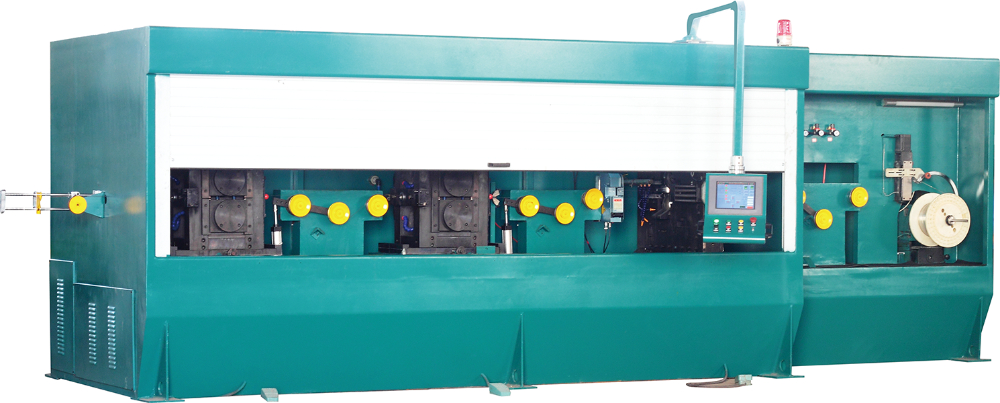
At the heart of modern manufacturing, precision profiled wire mills stand as essential hubs for producing wire with exact cross-sectional shapes beyond simple rounds. These mills integrate advanced engineering to ensure that wires meet stringent specifications for applications ranging from automotive components to medical devices. By focusing on tight tolerances and superior surface finishes, they enable industries to rely on consistent quality, reducing waste and enhancing product performance across diverse sectors where precise dimensions are non-negotiable.
The distinction of these mills lies in their specialized components, such as precision rolling stands and automated control systems, which work in tandem to shape wire into complex profiles like squares, hexagons, or custom geometries. Innovations in material handling and real-time monitoring allow for seamless adjustments during production, minimizing deviations and ensuring each batch adheres to exact standards. This adaptability not only boosts efficiency but also supports customization, empowering manufacturers to respond swiftly to evolving market demands without compromising on accuracy or durability.
Ultimately, the value of precision profiled wire mills extends beyond mere production; they serve as catalysts for innovation in manufacturing. By enabling the creation of high-integrity wire profiles, these systems contribute to lighter, stronger, and more reliable end-products, fostering advancements in fields like aerospace and electronics. Their role in achieving manufacturing excellence hinges on a commitment to precision at every stage, from raw material input to final output, ensuring that every piece of wire delivers on its promise of performance and reliability.
Streamlining Operations: How Rolling Mills Boost Efficiency in OEM Settings
In OEM settings, rolling mills play a pivotal role by transforming raw materials like metal billets into precise, standardized shapes through continuous deformation processes. This capability directly streamlines operations by reducing the need for multiple machining steps, allowing manufacturers to produce components faster and with fewer interruptions. For instance, a single rolling pass can achieve tolerances that might otherwise require extensive cutting or grinding, cutting down on production time and minimizing waste. By integrating these mills into assembly lines, OEMs can maintain a steady flow of materials, ensuring that downstream processes are never starved for parts and keeping overall efficiency high.
Beyond speed, rolling mills enhance efficiency by improving material properties and consistency. As metals are compressed and shaped, their grain structures refine, leading to stronger, more durable finished products that require less post-processing. This uniformity is crucial in OEM environments where components must meet strict specifications for reliability and performance. For example, in automotive manufacturing, rolled steel parts exhibit better fatigue resistance, contributing to longer vehicle lifespans. By delivering such quality directly from the mill, OEMs avoid costly rework or rejections, streamlining quality control and bolstering their reputation for dependable output.
Moreover, the adaptability of modern rolling mills allows OEMs to respond swiftly to changing demands without sacrificing efficiency. With advancements in automation and digital controls, these machines can be quickly reconfigured for different materials or designs, supporting just-in-time production models. This flexibility means manufacturers can pivot from producing one component to another with minimal downtime, optimizing resource use and reducing inventory costs. In competitive markets, such agility translates to a significant edge, as OEMs can meet custom orders or market shifts while maintaining lean, efficient operations that drive profitability and customer satisfaction.
Innovative Design Features of Modern Flat and Profiled Wire Equipment
Modern flat and profiled wire equipment has evolved far beyond basic rolling or drawing processes, incorporating advanced features that enhance precision and flexibility. For instance, some systems now integrate adaptive control algorithms that adjust tension and speed in real-time based on wire material properties and environmental conditions, reducing waste and improving consistency. This allows manufacturers to produce complex cross-sectional shapes—like trapezoidal or hexagonal wires—with smoother surfaces and tighter tolerances, which is crucial for applications in electronics or automotive wiring where space constraints demand exact fits.
Another standout innovation is the use of modular tooling setups that enable rapid changeovers between different wire profiles without lengthy downtime. These designs often feature quick-release mechanisms and interchangeable dies, supported by digital interfaces that guide operators through setup steps with minimal error. Combined with smart sensors that monitor wear and predict maintenance needs, this not only boosts production efficiency but also extends equipment lifespan, making it a cost-effective choice for high-mix, low-volume production runs common in custom wire fabrication.
Additionally, environmental and energy considerations have driven the development of more sustainable equipment, such as models with regenerative braking systems that recover energy during deceleration phases. Noise-reducing enclosures and vibration-damping materials further improve workplace conditions, while automated lubrication systems ensure optimal performance with less manual intervention. These features collectively push the boundaries of what's possible in wire processing, offering users not just better output but also smarter, more adaptable solutions that stand out in a competitive market.
Achieving High-Tolerance Results in Manufacturing with Custom Rolling Solutions
When tight tolerances are non-negotiable in manufacturing, custom rolling solutions step in to bridge precision gaps. Unlike off-the-shelf alternatives, tailored rolling processes adapt to unique material properties and project specifications, ensuring every component meets exact dimensional and surface finish requirements. This customization minimizes waste and rework, boosting efficiency on the production floor.
By leveraging advanced technology and expert engineering, manufacturers can achieve high-tolerance results that standard methods might miss. Custom rolling allows for fine-tuning parameters like speed, pressure, and temperature, which is crucial for industries like aerospace or medical devices where even minor deviations can lead to failure. The flexibility of these solutions supports complex geometries and specialized alloys without compromising quality.
Ultimately, integrating custom rolling into your workflow translates to superior product consistency and reliability. It's a strategic investment that pays off through enhanced performance, reduced downtime, and a stronger competitive edge in demanding markets.
Real-World Applications: Transforming Raw Materials into Premium OEM Products
The journey from raw materials to premium OEM products is a fascinating story of precision, innovation, and strategic collaboration. In industries ranging from automotive to electronics, manufacturers harness advanced technologies like additive manufacturing and smart factories to turn base metals, plastics, and composites into high-performance components. This transformation isn't just about reshaping materials—it's about embedding reliability, durability, and bespoke functionalities that meet exact client specifications, often in high-volume production lines where consistency is king. Real-world examples include the seamless integration of lightweight alloys in aerospace parts or the use of recycled polymers in consumer electronics, showcasing how raw inputs evolve into critical elements of cutting-edge products.
What sets this process apart is its deep customization, tailored to each OEM's unique needs. Unlike off-the-shelf solutions, premium OEM production involves close partnerships from design to delivery, ensuring materials are selected and processed for optimal performance—think of specialized coatings that enhance wear resistance in automotive engines or biocompatible materials crafted for medical devices. This hands-on approach allows for rapid prototyping and iterative testing, reducing waste and accelerating time-to-market. It's a dynamic ecosystem where raw materials aren't just transformed; they're engineered to solve specific challenges, delivering products that not only function flawlessly but also add tangible value to end-user applications.
Beyond technical prowess, this transformation drives sustainability and economic efficiency in real-world settings. By optimizing material usage and incorporating eco-friendly alternatives, manufacturers can reduce environmental impact while maintaining premium quality. In sectors like renewable energy, for instance, raw silicon is refined into high-efficiency solar panels through sophisticated OEM processes, balancing cost and performance. The result is a win-win: clients receive durable, scalable products that stand out in competitive markets, and producers build long-term trust through transparent, adaptive manufacturing. Ultimately, turning raw materials into premium OEM offerings isn't just a production step—it's a strategic advantage that fuels innovation across global supply chains.
FAQ
Flat and profiled wire rolling mills enhance OEM efficiency by delivering high-precision, customized wire shapes with minimal material waste, leading to cost savings and streamlined production processes.
These mills utilize advanced control systems and precise tooling to maintain tight tolerances and consistent wire profiles, ensuring reliable quality for complex OEM components.
Flat wire has a uniform rectangular cross-section, ideal for applications requiring straight edges, while profiled wire features custom contours or grooves, tailored for specific OEM design needs, such as seals or connectors.
Recent innovations include automated feedback loops for real-time adjustments, integrated quality monitoring sensors, and modular designs that reduce setup times, boosting overall throughput.
OEMs opt for this method for its flexibility in producing diverse wire forms with high accuracy, lower tooling costs for small batches, and reduced post-processing compared to forging or machining.
They are engineered with adaptable roll materials and cooling systems to process various metals, from steel to non-ferrous alloys, maintaining performance across diverse OEM specifications.
Regular lubrication, roll alignment checks, and wear monitoring of critical components help prevent downtime and sustain precision, supporting continuous OEM production demands.
By connecting to IoT platforms or production software, mills enable data-driven optimization, predictive maintenance, and seamless workflow integration, elevating OEM operational agility.
Conclusion
Modern flat and profiled wire rolling mills, incorporating advanced technology and innovative design features, fundamentally transform how OEMs approach manufacturing. By enhancing production capabilities through streamlined operations and custom rolling solutions, these mills enable high-tolerance results, boosting efficiency while maintaining precision. This technological evolution not only improves component reliability but also reduces waste, aligning with the demands of contemporary industries.
Real-world applications demonstrate how such equipment converts raw materials into premium OEM products, supporting sectors like automotive, aerospace, and electronics with consistent quality. Precision profiled wire mills, as key components for manufacturing excellence, empower OEMs to meet stringent specifications and adapt to dynamic market needs, thereby unlocking new levels of operational effectiveness and competitive advantage.
Contact Us
Contact Person: Rayna
Email: [email protected]
Tel/WhatsApp: 86 -173 1474 6343
Website: https://www.grmrollingmill.com/