

High Strength Steel Soil Foundation Formwork: Top Picks and Recommendations
2026-07-16
When it comes to modern construction, the foundation is everything. High strength steel soil foundation formwork is revolutionizing how we approach stability and efficiency on job sites. But with so many options available, finding the right system can feel overwhelming. In this post, we’ll cut through the noise with our top picks and practical recommendations, helping you choose a solution that combines durability, precision, and long-term value. From innovative designs to trusted names like LugongMachinery, we’ve done the research so you can build with confidence. Let’s dive in.
The Shift Toward High-Strength Steel in Soil Foundation Formwork
Construction teams once leaned heavily on traditional timber and conventional steel for soil foundation formwork, but the drawbacks were hard to ignore—warping, limited reuse, and inconsistent finishes plagued project timelines. High-strength steel changed the game by offering a rigidity that holds form even under the lateral pressure of wet concrete and shifting soil. This material doesn’t just survive the pour; it keeps dimensions precise pour after pour, which means less grinding, patching, and re-leveling down the line. In an industry where every hour of rework erodes profit margins, the switch feels less like an upgrade and more like plain common sense.
What’s often overlooked is how this shift ripples through the entire workflow. Because high-strength steel panels are lighter and easier to connect than their bulkier predecessors, crews can assemble and strip forms faster, even in tight or irregular excavation zones. The smoother surface finish reduces concrete adhesion, so form release becomes a quick tap-and-lift routine rather than a battle with sledgehammers. And when the steel finally reaches the end of its life cycle, its scrap value isn’t negligible—a factor that quietly sweetens the upfront investment for contractors who track every dollar.
There’s also a subtler transformation happening at the engineering level. Designers are starting to lean on the predictable yield strength of these alloys to push foundation depths and wall heights that would have required far bulkier temporary works in the past. This means fewer braces, less excavation spoil to manage, and a cleaner site overall. It’s not about chasing novelty; it’s about accepting that soil is unpredictable and concrete is heavy, and that your formwork should be the one thing on site that never adds to the headache.
How Steel Formwork Outlasts and Outperforms Wood or Aluminum
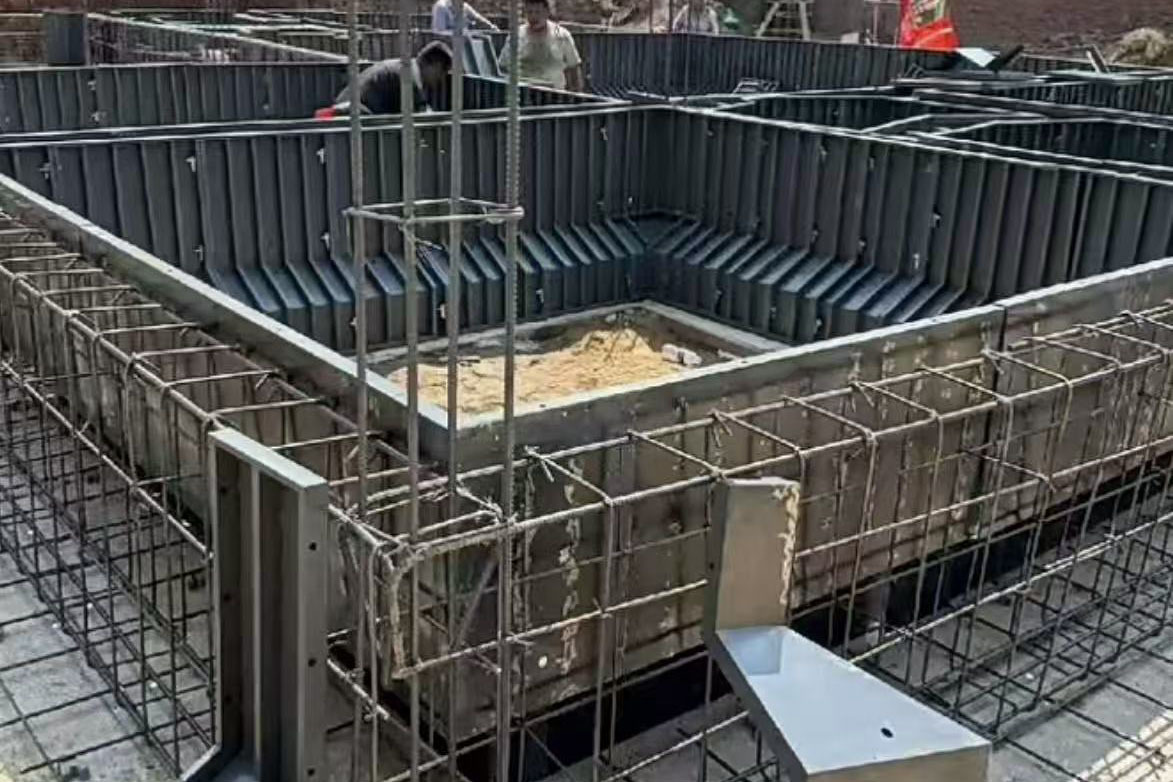
When you compare steel formwork to wood or aluminum, the longevity difference is stark. Wood absorbs moisture, warps, and degrades rapidly under repeated use, especially when exposed to the punishing conditions of a construction site. Aluminum, while more durable than wood, is still prone to dents and deformation, and its chemical reactivity can lead to unwanted bonding with concrete if not meticulously maintained. Steel, by contrast, retains its shape pour after pour, resisting the compressive forces of fresh concrete without flexing. It doesn’t rot, swell, or suffer from the same fatigue issues that plague lighter materials. This inherent resilience means a set of steel forms can handle hundreds of cycles with minimal upkeep, often outlasting the project itself and becoming a long-term asset rather than a disposable cost.
The performance gap shows up in the finished concrete as well. Steel’s rigidity ensures consistent, sharp corners and smooth, uniform surfaces that wooden forms—with their tendency to bow and leave wood grain imprints—simply can’t match. Aluminum may produce a decent finish, but its higher thermal expansion can cause misalignments as temperatures shift during curing. Steel’s dimensional stability under thermal stress keeps joints tight and lines true, reducing the need for post-pour grinding or patching. You end up with a wall or slab that meets tighter tolerances right out of the form, which cuts down on rework and keeps schedules intact. Contractors who switch rarely look back, because the day-to-day frustration of fighting warped plywood or dented aluminum panels disappears.
Another underappreciated advantage is steel’s fire resistance and overall site safety. Wood forms are an obvious fire hazard, especially when hot work is happening nearby, and aluminum can melt or weaken in extreme heat—a genuine concern on large commercial projects. Steel doesn’t burn, doesn’t contribute to smoke load, and maintains its load-bearing capacity even at temperatures that would destroy other formwork materials. Beyond that, the weight and solidity of steel panels create a stable assembly that feels secure underfoot during concrete placement. There’s a psychological confidence that comes with standing on something you know won’t give way, and that confidence translates into faster, safer pours. Over the lifespan of a formwork system, these factors add up to a compelling case for steel that goes beyond simple cost-per-use metrics.
Picking the Right System: Key Design and Load Factors
Every vendor will tell you their hardware is designed for demanding workloads, but the real test is in the details. Look beyond the spec sheet and check how the thermal management is handled—are components spaced out enough to breathe, or will everything throttle the moment ambient temperatures rise? Internal layout matters just as much as the processor inside. Small things like cable routing, fan placement, and the quality of the power delivery subsystem can make or break stability over weeks of sustained use.
Load factors often get oversimplified into a single peak performance number. The more important question is how the system behaves under mixed, real-world conditions. If you're running bursts of compute-heavy tasks between long idle periods, a system tuned for sustained throughput might waste energy. Conversely, if you're hammering it 24/7, you need headroom—current max load shouldn’t push past 70-80% of rated capacity, or you’ll be replacing parts sooner than you'd like. Also consider whether you’ll expand later; adding more drives, GPUs, or memory can shift both power and cooling requirements dramatically.
No amount of reading beats actual stress testing, but if you can’t get hands-on time, look for community reviews and bench data from people who’ve run similar workloads. Pay attention to recurring complaints about fan noise under load, shutdowns in warm environments, or VRM temperatures creeping too high. A well-designed system will handle its rated capacity gracefully, not just barely cling to it. Balancing design quality with your load profile now—and your expectations for tomorrow—is the surest way to avoid a costly mismatch.
Brands and Models Contractors Actually Trust
Walk onto any job site and you’ll quickly notice a pattern: the same few tool brands keep showing up, day after day. It’s not about flashy marketing or the latest gimmick—it’s about proven durability and easy access to parts when something finally breaks. Milwaukee, DeWalt, and Makita have become almost tribal choices among crews, with each brand earning loyalty through years of hard use. A cordless drill that can survive repeated drops from a ladder or a saw that cuts true after hundreds of hours means more than any spec sheet ever could.
Beyond the big three, certain specialized tools have earned cult status. Hilti rotary hammers and powder-actuated tools are almost untouchable for concrete work, while Stihl and Husqvarna dominate outdoor power equipment. Even within a brand, contractors swear by specific models: the Milwaukee M18 Fuel impact driver, the DeWalt XR series, or the Makita 18V LXT sub-compact tools. Ask any electrician about their favorite conduit bender or a plumber about their go-to pipe wrench, and you’ll get a passionate, detailed answer—not just a brand name, but a model number they’ve trusted on hundreds of jobs.
The real secret isn’t just the name on the tool—it’s the ecosystem. Batteries that interchange across dozens of tools, warranties that are actually honored without a fight, and a steady supply of replacement brushes or switches keep contractors coming back. When a tool earns a reputation for still working after being rained on, caked in drywall dust, or run over by a skid steer, that trust isn’t bought with advertising. It’s earned one stubborn, unglamorous day at a time.
Installation Shortcuts That Don’t Sacrifice Safety
Many installers now offer a “quick setup” mode that skips the usual step-by-step prompts, but they still perform integrity checks on the downloaded package. Behind the scenes, these tools compare cryptographic hashes and verify digital signatures before ever touching your system files. You get a faster install without the nagging fear of a corrupted or tampered download.
Some applications bundle all dependencies into a single self-contained archive, eliminating the need to fetch additional libraries online during setup. This approach not only speeds things up but also reduces exposure to man-in-the-middle attacks that can occur when pulling pieces from multiple sources. It’s a slick way to bypass the usual download-then-install dance while keeping the process secure.
Clever use of pre-flight checks can also make a difference. Instead of redundantly scanning the entire system, modern shortcuts target only the essentials—like the target directory permissions and available disk space—and then launch without further delay. By doing just enough to guarantee a safe environment, these installers leave behind the bloat without leaving the door open to trouble.
Care and Storage Routines for Long-Term Use
Keeping things in good shape over the years starts with small, consistent habits. Dust and grime have a way of creeping into hinges, ports, and seams, so a gentle wipe-down with a microfiber cloth every couple of weeks does wonders. For items like leather bags or wooden furniture, a conditioner applied once a season keeps cracks at bay. And don’t ignore the little things—loose screws, fraying cables, or sticky zippers become bigger problems if left alone.
Where and how you store your belongings matters just as much as cleaning them. Avoid damp basements or sun-baked attics, as humidity swings warp wood and delaminate composites. If you’re putting something away for months, breathable covers beat plastic bags, which trap moisture. For electronics, removing batteries before storage prevents corrosion, and a cool, dry closet beats a hot garage every time. A few silica gel packets tucked nearby can make a surprising difference.
FAQ
High strength steel formwork offers superior durability and reusability compared to wood. It resists warping, rotting, and damage from moisture, making it ideal for soil foundations where ground contact is constant. The steel panels maintain precise dimensions over many uses, leading to consistent wall alignment and reduced labor for adjustments. Plus, they handle high pour pressures without deflection, which is a common failure point with wood when dealing with tall or thick foundation walls.
Selecting panel size depends on your foundation height, soil type, and crane capacity. For basement walls up to 10 feet, modular panels around 3x8 feet are manageable without heavy lifting equipment. For deeper excavations or retaining walls, larger custom panels reduce joints but require crane handling. Consider the soil's lateral pressure: in expansive or loose soils, taller panels might need stronger bracing, so sometimes smaller, interconnected panels provide more flexibility and safety during erection.
Regular cleaning right after stripping is critical—remove soil residues and concrete splatter with high-pressure water and a non-metallic scraper to avoid scratching the steel face. Apply a light coat of release agent before each use to prevent rust and facilitate concrete release. Inspect welds, pins, and latches frequently, as ground vibrations and repeated handling can loosen connections. Store panels on racks, not directly on soil, to minimize moisture absorption and edge corrosion.
Several manufacturers have earned trust in the industry. PERI and Doka are global leaders with extensive range of handset and crane-lift panels, known for precision engineering and robust after-sales support. For heavy-duty soil foundation applications, Ulma and MEVA offer systems with high allowable concrete pressure. In North America, Western Forms and Symons are popular for their modular steel-framed panels that strip quickly. Local brands like Hebei Jingang and Wall-Ties & Forms also provide cost-effective alternatives without compromising strength.
Steel formwork might not be the best choice for very small, non-repetitive foundations where setup cost outweighs its benefits. If you have a one-off odd-shaped footing with limited reuse potential, lumber or engineered wood forms may be more economical. Also, in chemically aggressive soils like acidic peat or saline environments, steel can corrode faster despite protective coatings, so aluminum or composite forms might be a smarter long-term investment unless you commit to rigorous maintenance.
Soil stability is paramount—ensure excavation sides are properly sloped or shored before assembling forms. Steel panels add significant surcharge load near excavation edges, so maintain safe setback distances. Use engineered shoring and bracing designed for the soil's bearing capacity; never rely on the soil itself for form support unless it's been compacted and tested. During pouring, monitor for any washout beneath the form due to water or vibration, which can cause sudden settlement. Finally, heavy panels require proper lifting plans and tag lines to prevent swing incidents in tight excavations.
Conclusion
The move toward high-strength steel in soil foundation formwork is reshaping job site expectations, driven by the material's unmatched durability and load-bearing capacity. Unlike traditional wood or aluminum, steel systems resist warping, moisture damage, and heavy pressure cycles, making them a go-to for deep excavations and high-rise projects. When selecting a system, engineers must balance design flexibility with soil pressure calculations, opting for modular panels that can adapt to varying depths and reinforcement needs. Top-performing brands like PERI, Doka, and EFCO consistently earn contractor loyalty thanks to precision engineering and robust after-sales support. On-site, experienced crews leverage proven installation shortcuts—such as pre-assembled gang forms and hydraulic alignment tools—that speed up setup without compromising safety, ensuring each pour is precise and secure.
Long-term value hinges on disciplined care and storage routines, including immediate post-use cleaning, rust-preventive coatings, and organized stacking away from ground moisture. By investing in high-strength steel systems and following these best practices, teams can achieve decades of reliable service, reduced total cost of ownership, and a safer work environment. The shift isn't just about material superiority; it's a strategic choice that merges structural integrity with smart logistics, offering a competitive edge in today's demanding construction landscape.
Contact Us
Contact Person: Zhang Zhenlai
Email: [email protected]
Tel/WhatsApp: 8618563210000
Website: https://en.lugongmachinery.com/