

ODM Moulded Case Circuit Breaker Factory Custom Solutions for Electrical Safety
2026-11-02
Most circuit breaker factories sell you what they already make. But when your electrical safety depends on exact specifications—unusual trip curves, space constraints, or a harsh environment—off-the-shelf simply won’t cut it. That’s where a true ODM partner comes in. At SINGI, we don’t just stamp your logo on a generic moulded case circuit breaker. We engineer from scratch around your load profiles, fault levels, and installation realities. Curious how custom MCCB design can remove compromise instead of adding cost? Let’s open the enclosure.
Breaker Ratings That Reflect Your Real Load Profile
Most breaker selection charts assume a steady-state current that rarely matches what your equipment actually draws. A motor that starts under heavy load, a lighting circuit with high inrush, or a welding receptacle with intermittent duty all behave differently than a simple amp total would suggest. Instead of locking in a breaker based on nameplate amps alone, build a profile from measured or calculated demand across the entire operating cycle—startup surge, running load, and any brief overloads that are part of normal service.
Once that profile is clear, choose a breaker whose time-current curve gives enough room for normal peaks without crossing into nuisance trips, but still opens fast enough during a genuine fault. For circuits with harmonics or frequent switching, thermal-magnetic units may need to be derated or swapped for electronic trip breakers that can be set to match the actual envelope. The goal is not to pick the biggest breaker that holds, but the one that truly reflects the way the load behaves hour after hour.
Custom Enclosure and Mounting for Tight Panel Spaces
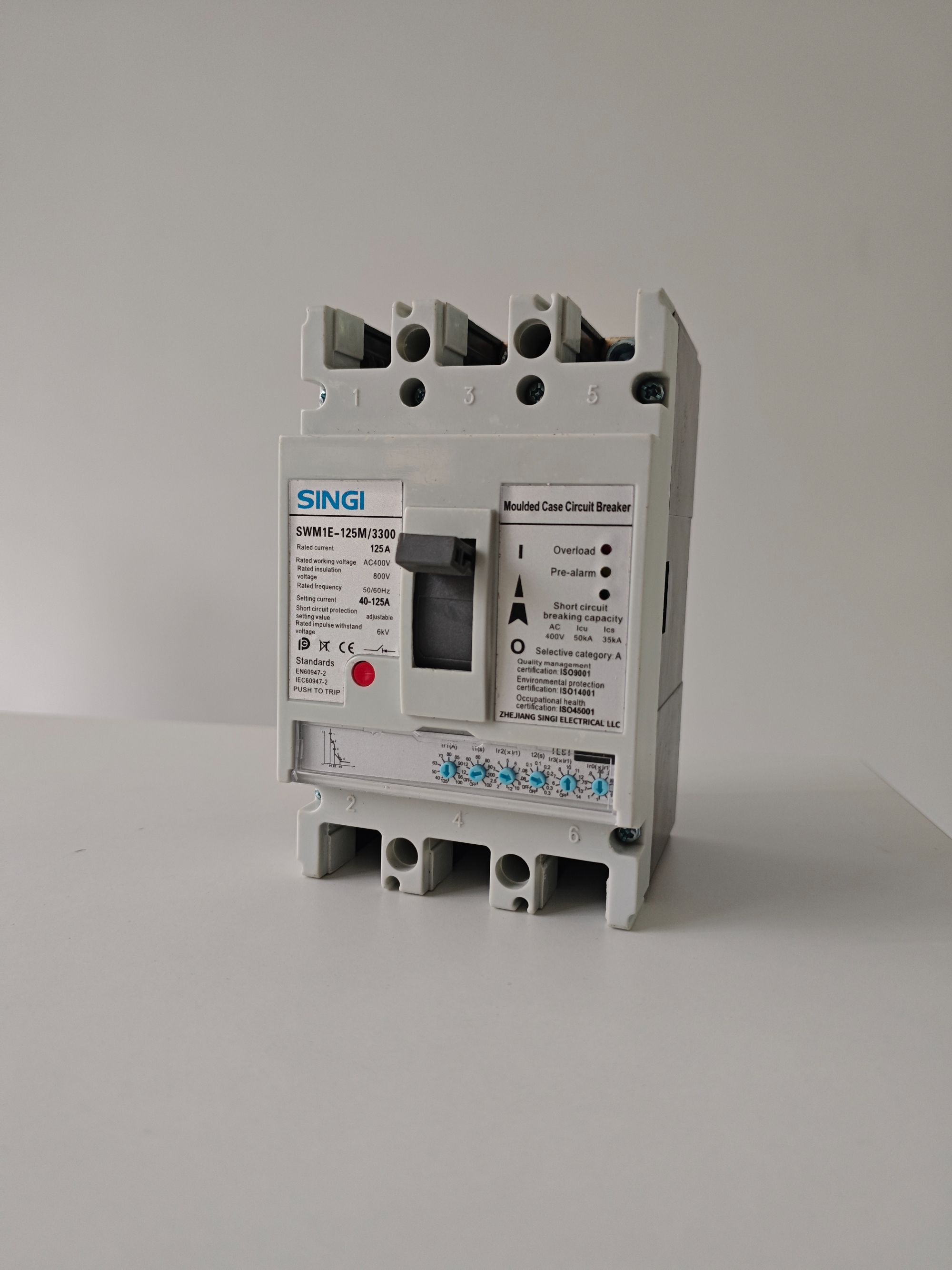
When a control cabinet leaves barely enough room for standard off-the-shelf housings, a custom enclosure built around the actual cutout and depth constraints often saves more space than any adapter plate ever could. We start by mapping the exact rear clearance behind the panel, including terminal block positions and wire bend radii, so the enclosure doesn't just fit on paper but can actually be wired and serviced without removing neighboring components.
The mounting method matters just as much as the shell itself. Instead of forcing a generic bracket into a crowded row, we use low-profile side tabs, rear studs, or snap-in features that engage existing panel perforations. For especially shallow spaces, the PCB can be mounted vertically or split across two boards connected by a short flex cable, allowing the enclosure depth to drop below what a single-board layout would require.
Thermal behavior inside a tight panel is often overlooked until components start drifting. A custom design lets us place vents or a small heat spreader exactly where airflow from the cabinet fan actually reaches, rather than where a standard housing happens to have slots. The result is a unit that fits the available real estate without compromising on accessibility, cooling, or long-term reliability.
Trip Curves Tuned to Stop Nuisance Trips
Nuisance trips often trace back to a curve that’s too rigid for the load it’s guarding. Motors, LED drivers, and power supplies pull brief inrush spikes that look like faults to a standard breaker, so it opens when nothing is actually wrong. By shifting the trip curve’s time-current response slightly, the breaker learns to ignore those short, harmless surges while still clamping down on sustained overcurrent.
That tuning isn’t about making protection weaker—it’s about making it smarter. A curve matched to the equipment’s startup profile can hold through a 10x inrush for a few cycles, then tighten up if the current stays high. The result is fewer 3 a.m. resets, less downtime from transient events, and no compromise on clearing real faults.
Factory Short-Circuit Tests on Every Custom Build
Before any custom unit leaves our floor, we deliberately push it into fault conditions that most manufacturers would rather avoid. We short the output terminals, force input voltage swings beyond stated tolerances, and simulate wiring mistakes that happen in real installations. Each build is treated as its own prototype, not as a repeat of a previous design. That means the test procedure for a one-off medical power supply looks nothing like the procedure for a ruggedized industrial converter, even if they share a common platform.
The short-circuit test itself is not a simple pass-or-fail check. We monitor how the unit behaves during the first few milliseconds of a dead short, how it recovers after the fault is removed, and whether any component drifts out of specification afterward. Many power supplies will survive a brief short but degrade quietly over the next hundred cycles. We run repeated short-and-release sequences at different load points, sometimes for hours, to catch that kind of latent weakness. A custom build that passes a one-second short but fails on the fiftieth repetition gets torn down and redesigned before it ever reaches a customer.
Documentation of these tests is included with every unit, showing exactly what faults were applied and how the hardware responded. No generic certificates or checkboxes. If a customer needs to see a particular short-circuit scenario recreated, we can run it again while they watch remotely. That level of transparency comes from confidence in the work, not from a marketing script. It is the reason our custom builds carry a reputation for surviving the mistakes that happen after installation, when nobody is watching.
From Single Prototypes to Full Production Without Delays
Moving from a single working prototype to a repeatable production run often uncovers gaps that never showed up in the lab: tolerances drift once hardened tooling replaces machined fixtures, surface finishes shift after long thermal cycles, and procurement lead times quietly eat the schedule. A practical handoff locks the bill of materials early, freezes critical dimensions before pilot builds, and runs validation batches on the same equipment that will carry full production—not benchtop setups that flatter the design.
Most delays come from re-qualifying parts after every small revision. Instead, tooling validation and first-article inspection are staged in parallel with fixture design and packaging development. Approved material specs reach suppliers before final drawings, so purchasing starts moving while the pilot line is still collecting data. The result is a handoff where a prototype that passed functional testing becomes a stable, documented production process with no idle window between the two.
Engineering Changes You Can Request Directly From the Floor
On many production lines, the people closest to the work often spot issues that never make it into formal reports. A bracket that requires an extra hand to align, a cable routing that pinches during assembly, or a fastener that consistently strips can all be flagged right where they happen. Instead of waiting for a scheduled design review, you can submit a change request on the spot and describe exactly what you’re seeing.
The types of changes accepted from the floor usually focus on fit, function, and manufacturability. You might request a small clearance adjustment, a different torque spec, a revised hole pattern, or a substitute material that’s already approved. As long as the change doesn’t affect safety or regulatory compliance, it can often be evaluated quickly without routing through multiple engineering layers.
When you file a floor-level request, include the part number, the station where the issue occurs, and a photo or sketch if possible. That gives the engineering team enough context to act without a site visit. Many teams now keep a short backlog of these field-driven changes and review them weekly, so your note can turn into a revised drawing or work instruction within days.
FAQ
We work from your specifications, whether that means adjusting current ratings, trip characteristics, terminal types, or even the breaker's footprint. Our engineering team also helps with branding, housing colors, and labeling so the final product fits your product line without re-engineering your downstream assembly.
Each design is checked against the relevant IEC or UL requirements before tooling starts. We pre-test prototypes in-house, then submit samples to accredited third-party labs for full certification. That way you get a breaker that’s ready for local inspections without surprises.
It usually starts with a technical discussion about your load profiles and enclosure constraints. We then provide a design proposal and prototype within agreed timelines, refine it based on your feedback, run pilot production, and only move to mass production after you sign off on the pre-production samples.
Yes, we supply complete documentation packages including datasheets, installation guides, and test reports. If you need specific declarations or certificates for your market, our compliance team prepares those in parallel with production so your release schedule isn’t delayed.
Every breaker undergoes routine calibration, dielectric strength testing, and mechanical endurance checks on the line. For custom orders we add extra verification steps based on the agreed specification, such as temperature rise tests or short-circuit tests on sample units from each batch.
We don’t require huge minimum quantities for every project. Our production line can be reconfigured for smaller batches, which is useful for niche applications or when you want to validate a new design in the field before committing to larger volumes.
We see strong demand from renewable energy systems, industrial control panels, EV charging infrastructure, and building power distribution. Because these fields often have unusual space or performance requirements, a custom MCCB design helps avoid compromises on protection or installation.
Conclusion
When standard breakers fall short, ODM factory solutions start with your actual load profile. Instead of forcing off-the-shelf ratings, we fine-tune ampere settings around real current curves so protection is neither excessive nor underrated. Compact panel spaces get equal attention—custom enclosures and mounting brackets are designed to slide into tight layouts without sacrificing accessibility. Trip curves are then dialed in to ignore harmless inrush spikes while still reacting instantly to genuine fault currents. These aren't theoretical tweaks; every adjustment is grounded in field data from your equipment.
Every custom build leaves our floor only after a full short-circuit test, proving interruption capacity under real fault conditions rather than relying on calculations alone. Prototypes move to full production without schedule slip because tooling and test rigs are already configured for your variant. When you need a change mid-run—say a shifted terminal position or a different thermal response—you can speak directly with the engineers on the shop floor and see the revision implemented without layers of approval. That kind of direct line keeps electrical safety from being compromised by generic products.
Contact Us
Contact Person: Jack
Email: [email protected]
Tel/WhatsApp: (+86) 13757759651
Website: https://www.singi.com