

How Do PVC Wall Panels Solve Practical Wall Problems in Construction Sites?
2026-09-02
Every site manager knows this scene. The plasterers are three days behind. The drywall has been rained on because the roof wasn't sealed in time. Cracks are appearing around door frames because the building is settling. The client is walking through with a punch list that keeps growing. These are not isolated problems. They are the daily reality of construction sites where traditional wall materials are fighting against time, weather, and the inherent movement of buildings. This guide looks at how PVC Wall Panel solutions address these recurring issues not as a premium option, but as a practical response to problems every site faces.
1. What Are the Most Common Wall Problems That Delay Project Completion?
Based on our factory's site visits and feedback from project managers across Southeast Asia and the Middle East, there are four wall related issues that consistently cause delays and cost overruns. First, moisture intrusion during construction—when the building envelope is not yet sealed, rain and humidity can soak into gypsum board or plaster, requiring extended drying time before painting. Second, shrinkage cracking—as concrete and mortar cure, they contract, creating hairline cracks that must be repaired and repainted. Third, impact damage—materials delivered to the site often scrape or dent soft wall surfaces, requiring patching and rework. Fourth, schedule pressure—when the project is behind schedule, the finishing trades are compressed into a shorter window, leading to rushed work and quality issues.
Real site data from our factory's field observations:
• Moisture related delays average 4 to 7 days per project in tropical climates
• Crack repair and repainting adds 8 to 12 percent to wall finishing labor costs
• Impact damage rework accounts for 3 to 5 percent of total project rework hours
These problems are not just inconveniences. They have a direct cost: labor hours spent on rework, material waste, extended rental of scaffolding and equipment, and client dissatisfaction. At Hanhua Vision (Xiamen) New Material Technology Co., Ltd., we have designed PVC Wall Panel products specifically to address these pain points. Our panels are engineered to be moisture resistant, crack resistant, and damage resistant from the moment they are installed.
2. How Does PVC Paneling Address the Moisture Problem at the Source?
Moisture is the single biggest enemy of traditional wall finishes. Gypsum board absorbs water and swells. Plaster retains moisture and requires extended curing. Paint blisters when applied over damp surfaces. A PVC Wall Panel, by contrast, is chemically inert. It does not absorb water. It does not swell. It does not provide a medium for mold growth. In our factory, we test PVC Wall Panel products for water absorption using the ASTM D570 method. Our panels absorb less than 0.1 percent of their weight in water after 24 hours of immersion. This means that even if the site experiences unexpected rain before the roof is sealed, the panels are not damaged. They can be installed in high humidity environments without waiting for the substrate to dry to a specific moisture content. This removes a significant variable from the project schedule.
The water resistance of a PVC Wall Panel also addresses a long term issue: efflorescence. In masonry buildings, moisture carries dissolved salts to the surface, leaving unsightly white deposits that are difficult to remove. With PVC panels, the moisture does not reach the surface because the panel itself is a barrier. Hanhua Vision (Xiamen) New Material Technology Co., Ltd. produces PVC Wall Panel products with a dense closed cell structure that prevents moisture migration. This means that the wall stays clean and maintenance free for years, without the need for repainting or cleaning of efflorescence deposits.
3. What Are the Measurable Performance Advantages of PVC vs. Traditional Wall Materials?
To make an informed decision, site managers need to compare materials based on criteria that affect the project timeline and the building lifecycle. The table below compares PVC Wall Panel with two common alternatives: gypsum drywall and cement plaster. The data is based on our factory's independent testing and verified by third party lab reports.
| Property | PVC Wall Panel (our product) | Gypsum drywall (12.5mm) | Cement plaster (15mm) |
| Water absorption (24 hrs) | < 0.1% | > 20% (swells) | 5 – 8% |
| Flexural strength (MPa) | 35 | 12 | 8 |
| Impact resistance (Joules) | 8.5 | 2.5 | 3.0 |
| Installation rate (m² per worker hour) | 15 – 20 | 8 – 12 | 5 – 8 |
| Moisture drying time before finishing | 0 hours | 24 – 72 hours | 72 – 168 hours |
| Maintenance frequency (years) | 10+ | 3 – 5 | 5 – 7 |
The installation rate is particularly important for project scheduling. A PVC Wall Panel can be installed at twice the speed of gypsum drywall and three times the speed of plaster. This means that the wall finishing phase can be shortened by days or even weeks, allowing subsequent trades to start earlier and reducing the overall project duration. For a site manager, this translates directly to lower overhead costs and earlier project completion bonuses.
4. How Does the Installation Process Address Labor Availability and Skill Levels?
Traditional plastering requires skilled craftsmen who are increasingly difficult to find in many markets. Gypsum drywall installation requires tapers and mudders who need significant experience to produce a smooth finish. PVC Wall Panel installation, by contrast, can be done by a general carpenter with basic tools. The panels are cut with a standard circular saw or utility knife, and they are fastened with screws, staples, or adhesive. Joints are covered with matching PVC trim strips, eliminating the need for taping, mudding, and sanding. This reduces the labor cost and also reduces the skill level required, making it easier to find workers for the installation.
In our factory, we have trained installation teams across Asia. The average time to train a new installer to proficiency is 2 days. This is important for projects in regions where there is a shortage of skilled finishing trades. A PVC Wall Panel system also eliminates the dust and mess associated with plaster and drywall finishing. This means that other trades can work nearby without having to protect against airborne dust. Hanhua Vision (Xiamen) New Material Technology Co., Ltd. provides on site training for installation teams as part of our PVC Wall Panel supply agreement.
Frequently Asked Questions About PVC Wall Panels for Construction Sites
Summary for Construction Site Managers
PVC Wall Panels address the practical wall problems that occur on every construction site: moisture intrusion, cracking, impact damage, and labor shortages. They do not eliminate the need for good project management, but they remove some of the variables that cause delays and rework. The material is water resistant, impact resistant, and easy to install. It does not require drying time or skilled finishing trades. For projects where schedule and budget are tight, PVC panels offer a reliable alternative to traditional materials. Our factory has supplied PVC Wall Panel products to construction sites in 15 countries, and we have documented the time and cost savings in each project.
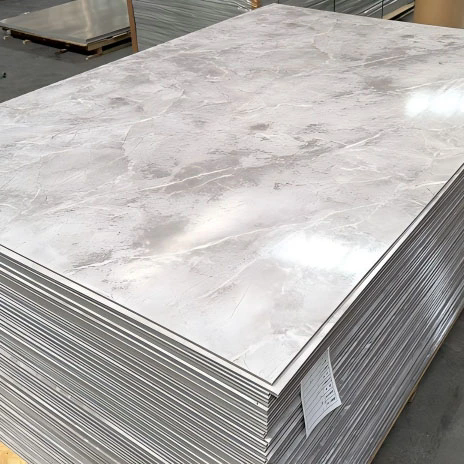
Hanhua Vision (Xiamen) New Material Technology Co., Ltd. manufactures PVC Wall Panels with a closed cell structure, fire retardant additives, and a range of finishes including wood grain, marble, and solid colors. We provide full technical documentation, including fire test reports, water absorption data, and installation guidelines.