

What Are the Main Sustainability Advantages of Using Prefabricated Steel Frames for School Buildings
2026-03-26
As educational institutions worldwide seek faster, safer, and more environmentally responsible construction methods, Prefabricated Steel Frame School solutions have emerged as a compelling alternative to traditional building approaches. At EIHE STEEL STRUCTURE, we have witnessed a significant shift toward steel-framed educational facilities, driven largely by their exceptional sustainability credentials. Understanding these advantages helps architects, school administrators, and government agencies make informed decisions that balance immediate needs with long-term environmental responsibility.
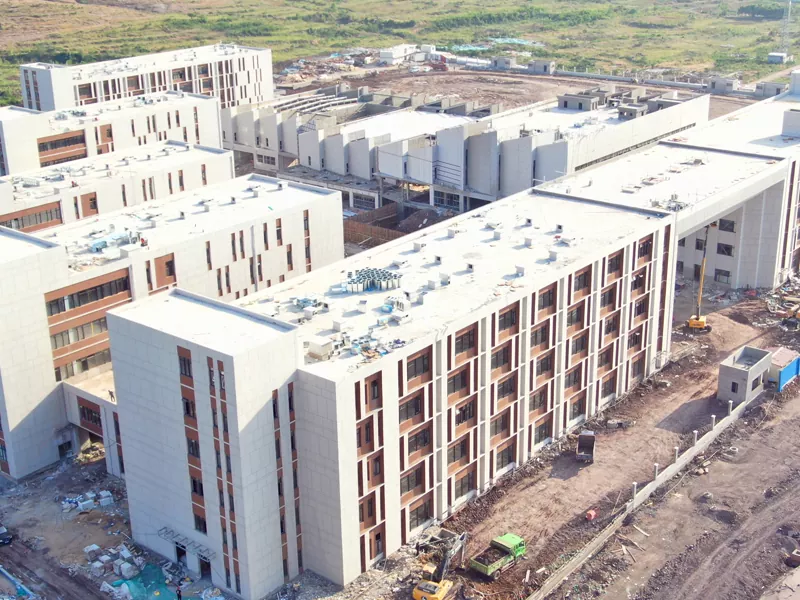
Core Sustainability Benefits at a Glance
| Sustainability Factor | How Prefabricated Steel Frames Deliver | Impact Level |
|---|---|---|
| Material Efficiency | Precision manufacturing reduces waste by up to 95% compared to on-site cutting | High |
| Carbon Footprint | Lower embodied carbon; steel is infinitely recyclable without loss of strength | High |
| Energy Performance | Superior thermal envelope integration reduces operational energy consumption | Medium-High |
| Construction Impact | Minimal site disturbance; reduced noise, dust, and ecosystem disruption | Medium |
| Lifecycle Longevity | 50+ year structural lifespan with minimal maintenance requirements | High |
Material Optimization and Waste Reduction
Traditional school construction generates substantial material waste—often exceeding 15% of total materials. Prefabricated Steel Frame School systems invert this paradigm. At EIHE STEEL STRUCTURE, every steel component is precisely engineered and fabricated in controlled factory environments before delivery to site. This approach achieves material utilization rates exceeding 98%, with steel offcuts returned directly to the recycling stream.
The implications extend beyond waste statistics. Reduced on-site material storage minimizes land disturbance, while fewer delivery vehicles lower transportation emissions. For school districts operating within tight budgets and environmental mandates, this combination of cost predictability and ecological responsibility proves transformative.
Circular Economy and End-of-Life Value
Perhaps the most distinctive sustainability advantage lies in steel’s circular lifecycle. Unlike concrete or masonry structures that often end up in landfills, Prefabricated Steel Frame School buildings retain substantial material value at end of life. Steel maintains 100% of its structural properties through repeated recycling cycles, with current global steel recycling rates exceeding 85%.
This forward-looking consideration matters enormously for public infrastructure. School buildings designed today will eventually be decommissioned or repurposed. EIHE STEEL STRUCTURE designs for adaptability and eventual material recovery, ensuring that today’s educational investment becomes tomorrow’s resource rather than tomorrow’s environmental liability.
Operational Energy Performance
Sustainability encompasses not only embodied impacts but also decades of operational energy use. Prefabricated steel frames provide dimensional stability that maintains thermal envelope integrity over the building’s lifespan. Unlike timber framing, which can settle and shift, steel structures preserve airtightness and insulation continuity year after year.
Modern Prefabricated Steel Frame School designs integrate seamlessly with high-performance insulation systems, solar-ready roof structures, and efficient HVAC integration. This structural predictability enables more accurate energy modeling and consistent long-term performance—essential for schools pursuing net-zero or passive house certifications.
Construction Phase Environmental Impact
The accelerated construction timeline inherent to prefabricated steel frames delivers significant environmental benefits. On-site construction duration typically reduces by 30 to 50 percent compared to conventional methods. This compression means fewer days of heavy equipment operation, reduced diesel emissions, less noise disruption to neighboring communities, and minimized impact on existing school operations when building additions or replacements.
For EIHE STEEL STRUCTURE projects, this efficiency translates directly to sustainability outcomes. Shorter construction periods reduce the carbon footprint of the building process itself while allowing students and staff to occupy healthier, purpose-built environments sooner.
Prefabricated Steel Frame School FAQ
What makes prefabricated steel frames more sustainable than wood or concrete for school construction?
Prefabricated steel frames offer superior sustainability through three primary mechanisms. First, steel manufacturing increasingly relies on electric arc furnaces powered by recycled scrap, reducing virgin material extraction. Second, the precision fabrication process eliminates nearly all construction waste—a critical advantage when compared to wood framing, which generates significant off-cut waste, or concrete construction, which consumes enormous quantities of water and aggregate. Third, steel’s durability ensures that the structural system remains serviceable for over half a century with minimal maintenance, whereas timber may face moisture-related degradation and concrete often develops cracking requiring remediation. At the end of the building’s useful life, steel frames can be dismantled and recycled into new structural members without downcycling, creating a true circular material economy that wood and concrete cannot replicate.
How do prefabricated steel frame schools contribute to indoor environmental quality and student health?
Indoor environmental quality represents a critical sustainability dimension often overlooked in material-focused assessments. Prefabricated Steel Frame School buildings from EIHE STEEL STRUCTURE incorporate several health-promoting characteristics. Steel does not support mold growth, a significant concern in moisture-prone regions where organic building materials can foster respiratory irritants. The dimensional stability of steel prevents gaps and thermal bridges where condensation might accumulate within wall assemblies. Additionally, because components are fabricated off-site, on-site activities requiring adhesives, sealants, and coatings are substantially reduced, lowering VOC exposure during construction and initial occupancy. The precision of prefabricated connections also enables superior air sealing, which improves ventilation control and allows mechanical systems to deliver filtered outdoor air effectively rather than drawing unconditioned air through uncontrolled leakage paths.
What is the lifecycle carbon comparison between prefabricated steel frame schools and conventional construction methods
Lifecycle carbon analysis reveals that Prefabricated Steel Frame School buildings typically achieve lower total carbon footprints despite steel’s energy-intensive initial production. The explanation lies in three compounding factors. Upfront embodied carbon benefits from dramatically reduced material waste and optimized structural design—prefabrication allows for lighter members since engineers specify exactly what each component must carry rather than applying conservative on-site safety factors. Operational carbon advantages accrue from superior thermal performance and durability; a steel-framed school requiring fewer repairs over 50 years avoids the carbon emissions associated with replacement materials and construction activities. Finally, end-of-life considerations strongly favor steel: whereas concrete demolition generates substantial carbon emissions and material that typically becomes low-value fill, steel frames can be disassembled with the material entering recycling streams that displace virgin steel production. When evaluated over a full 50-year building lifecycle inclusive of refurbishment and eventual deconstruction, prefabricated steel frame solutions consistently demonstrate the lowest carbon outcomes among major structural systems.
The Path Forward for Sustainable School Infrastructure
The transition to Prefabricated Steel Frame School construction represents more than a procurement trend—it reflects a fundamental recognition that educational infrastructure must align with broader sustainability commitments. School districts face dual pressures: delivering facilities quickly to serve growing populations while meeting increasingly stringent environmental performance standards. EIHE STEEL STRUCTURE has demonstrated across hundreds of educational projects that these objectives are not merely compatible but mutually reinforcing.
By combining precision engineering, material efficiency, and circular economy principles, prefabricated steel frames enable schools to achieve sustainability goals without compromising design quality, construction speed, or long-term durability. The evidence increasingly shows that for educational environments where health, longevity, and responsible resource use converge, steel framing stands as the most comprehensively sustainable structural solution available today.
Ready to explore how prefabricated steel frame construction can meet your school’s sustainability and performance goals?
Contact EIHE STEEL STRUCTURE today to discuss your project requirements with our educational facility specialists. Our team provides comprehensive support from conceptual design through fabrication and installation, ensuring your school building delivers lasting value for students, staff, and the communities you serve.