

Why Are Marble Wall Panels Becoming the Smarter Choice for Modern Interior Walls?
2026-04-07
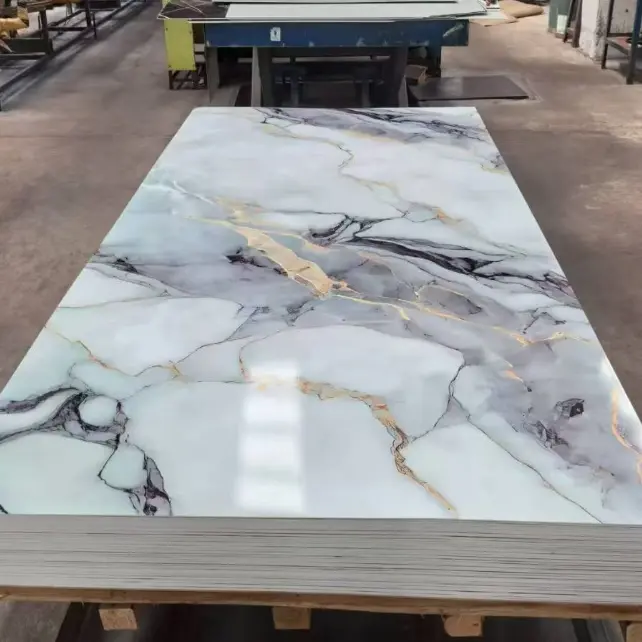
When I work on interior surface materials for homes, hotels, offices, and commercial projects, I always pay attention to one simple question: how can I achieve a premium marble look without bringing unnecessary weight, installation pressure, or maintenance trouble into the project? That is exactly where Hanhua Vision (Xiamen) New Material Technology Co., Ltd. gradually comes into the conversation. Instead of forcing designers, contractors, and distributors to compromise between appearance and practicality, the company focuses on wall solutions that make decorative planning more efficient. In my view, Marble Wall Panels make far more sense today because they help create a refined visual result while staying easier to handle in real-world applications.
What Makes A Marble Look So Difficult To Deliver With Traditional Materials?
I have seen many projects start with a strong design idea and then run into familiar obstacles once execution begins. Natural stone is beautiful, but beauty alone does not solve installation, transportation, cutting, labor coordination, or long-term upkeep. Buyers often want the richness of marble, yet they also need a cleaner workflow and a more predictable budget.
That is where many decision-makers begin rethinking their options. They are not only asking for a decorative product. They are asking for a wall solution that works well from sampling to shipment, from on-site fitting to final presentation, and from handover to daily use.
- I want a marble-style finish that looks upscale in both residential and commercial spaces.
- I want materials that are easier to install and manage than heavy natural stone.
- I want a cleaner visual effect with better consistency across a large wall area.
- I want to reduce rework, damage risk, and unnecessary construction delays.
- I want a surface that supports long-term use without turning maintenance into a burden.
Why Do I See Marble Wall Panels As More Than A Decorative Substitute?
I do not treat Marble Wall Panels as a cheap imitation of stone. I see them as a modern wall finishing system designed for projects that need both visual appeal and practical control. That distinction matters. A decorative material should not only look good in a showroom sample. It should still perform well when installed across feature walls, corridors, lobby areas, reception zones, and other spaces where consistency really matters.
What I like most is that this kind of solution responds directly to common buyer pain points. It offers a marble-inspired appearance, but it also supports a more stable and manageable process. That means it can help interior contractors, importers, wholesalers, and project buyers deliver a polished result with less friction.
How Do Marble Wall Panels Help Me Balance Visual Value And Project Efficiency?
In my experience, the best materials are the ones that reduce complexity without reducing impact. A marble-style wall finish should create depth, elegance, and visual continuity. At the same time, it should simplify the path from specification to installation. This is why I think the product category has become increasingly attractive in overseas markets.
| Project Concern | What Buyers Usually Worry About | How Marble-Style Wall Panels Help |
|---|---|---|
| Appearance | Will the wall still look premium at scale | They provide a marble-inspired finish that supports a more unified wall effect |
| Installation | Will the process be too slow or difficult | They support a more manageable installation workflow than many traditional heavy materials |
| Consistency | Will the final look vary from panel to panel | They are better suited for controlled repeat application across large areas |
| Maintenance | Will daily cleaning become a headache | They are designed for practical use and easier routine care |
| Customization | Can the material work with different wall conditions | They are suitable for multiple layouts, sizes, and decorative purposes |
Which Spaces Benefit Most From Marble Wall Panels?
I find that the strongest applications are the spaces where image matters, but reliability matters just as much. A dramatic material may impress at first glance, yet if it is hard to maintain or hard to execute, the project loses momentum. That is why I often recommend this category for spaces that need both presentation and practicality.
- Living room background walls that need a cleaner and more upscale focal point
- Hotel lobbies and corridors where visual continuity influences guest perception
- Office reception walls that need a modern and professional surface language
- Retail or commercial display areas that require decorative impact with operational convenience
- Model rooms and exhibition spaces where finish quality must support the brand image
These are not random use cases. They are exactly the environments where people notice wall quality immediately, and where a controlled finish can make the whole space feel more complete.
What Should I Pay Attention To When Choosing The Right Panel Design?
If I am selecting materials for a real project instead of just comparing catalog images, I look far beyond pattern alone. A good marble effect depends on how the design behaves across the full wall, not how dramatic a single sample looks in isolation. A panel with an attractive pattern can still fail if it creates too much visual clutter once repeated over a larger area.
I usually focus on the following:
- Whether the texture feels balanced over a full wall instead of looking too busy
- Whether the color tone works with modern interiors, hospitality spaces, or commercial branding
- Whether the size can reduce unnecessary joints and improve visual continuity
- Whether the edges, transitions, and splicing details can support a complete finish
- Whether the product suits the actual structure of the wall rather than just flat mockup conditions
When these details are handled properly, the wall does not merely look installed. It looks intentionally designed.
How Can Large Formats And Custom Options Improve The Final Effect?
I always take panel size seriously because size influences both appearance and labor. Larger formats often help reduce visible seams and give the wall a cleaner, more continuous character. That is especially important in lobbies, feature walls, and branded commercial interiors where the final impression depends on visual flow.
Custom sizing also matters more than many buyers expect. It is not just about offering special dimensions for the sake of flexibility. It is about reducing on-site cutting, lowering waste, and improving fit in the places where precision matters most. When wall materials can be aligned more closely with project dimensions, I usually get a more efficient installation process and a better finished result.
Can A Marble-Style Wall System Work Beyond Simple Flat Surfaces?
Yes, and this is one of the reasons I think the category is so useful. Real projects rarely involve one perfect flat wall and nothing else. I often see corners, wrapped columns, partial curves, wall transitions, and decorative structures that require more than a standard sheet approach. A strong wall solution should support these conditions without making the visual language feel disconnected.
That is why I pay close attention to whether the product can support different structural areas with a coherent finish. When a wall material can extend its marble-inspired appearance through corners, feature areas, and connected surfaces, the space feels far more intentional and professionally executed.
Why Do Splicing And Edge Details Matter More Than Buyers Expect?
I have noticed that many average-looking projects do not fail because the material itself is poor. They fail because the joints, trims, and transitions were treated as an afterthought. Even a premium-looking surface can lose impact if the wall edges look unfinished or the seams interrupt the design too aggressively.
That is why I always evaluate the whole system rather than the panel alone. I want to know how the installation will look at the corners, along the edges, around openings, and across continuous wall runs. A convincing decorative result depends heavily on this level of detail.
| Detail Area | Why It Matters | What I Look For |
|---|---|---|
| Panel Joints | They influence visual flow across the wall | Cleaner transitions and a more natural continuation of pattern |
| Edge Treatment | They affect whether the project feels finished | Neat closure details that support the overall design language |
| Corner Areas | They are often the first place where poor execution shows up | Practical compatibility with interior and exterior corner conditions |
| Visual Continuity | It determines whether the wall feels premium | A coherent look across large decorative surfaces |
What Daily Performance Do I Expect From Modern Wall Materials?
For me, a decorative wall material has to survive real life, not just installation day. Once the space is in use, the wall will face touching, cleaning, environmental fluctuation, and routine wear. That is why I pay attention to whether the surface supports straightforward upkeep and stable long-term use.
I want a wall finish that fits busy lifestyles and commercial standards. In practical terms, that means it should help users keep the space looking clean and presentable without constant maintenance stress. A material can be visually attractive, but if it creates extra care demands, it becomes less appealing to distributors, project buyers, and end users alike.
Why Do More Buyers Prefer A Solution That Feels Predictable From Start To Finish?
Because predictability saves time, protects margin, and reduces frustration. That may not sound glamorous, but it is often the deciding factor in sourcing. When I choose materials for decorative walls, I want to know that the product can support a repeatable and scalable workflow. A good wall panel solution should help me feel more confident about sampling, shipment, installation, and finished appearance.
This is also why I believe products from experienced manufacturers stand out. Buyers do not only need surface designs. They need supply support, product understanding, and manufacturing experience that align with project expectations. That is where a specialized company can make the selection process feel much more secure.
Who Should Consider Working With Hanhua Vision (Xiamen) New Material Technology Co., Ltd.?
If I were sourcing wall materials for distribution, interior projects, hotel renovation, office upgrades, or decorative wholesale channels, I would seriously consider a supplier that understands how visual products perform in practical settings. Hanhua Vision (Xiamen) New Material Technology Co., Ltd. fits that conversation well because the value is not only in the marble look itself, but in the way the product category supports easier planning and broader application potential.
For buyers who want a cleaner decorative effect, more manageable execution, and a wall solution that aligns with modern market demand, Marble Wall Panels are worth close attention. They offer the visual language of marble in a format that better matches today’s expectations for efficiency, consistency, and everyday usability.
How Can I Move Forward If I Want A Better Wall Solution For My Next Project?
If you are comparing decorative wall materials and want a finish that looks refined while staying practical for sourcing and installation, this is the right time to act. If you want to learn more about specifications, application possibilities, custom options, or bulk supply support, contact us and leave your inquiry today. I believe the right partner can make your next interior project easier, more polished, and far more competitive, and Hanhua Vision (Xiamen) New Material Technology Co., Ltd. is ready to help you choose the right Marble Wall Panels solution for your market.