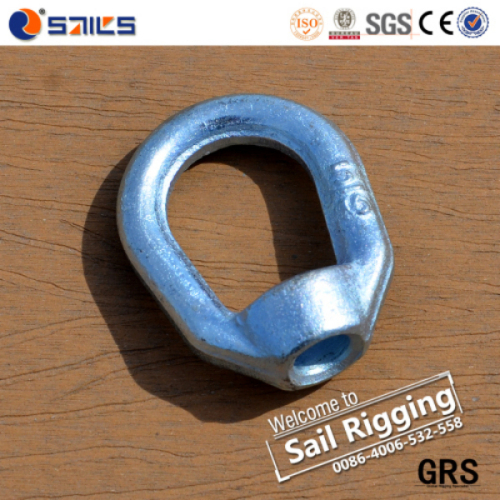

Nut
Nuts are fundamental fastening components essential across countless mechanical and structural assemblies. At industrial-equipments.com, we understand that the integrity of any project hinges on the quality and precision of these seemingly small parts. This comprehensive guide delves into the world of nuts, providing detailed technical specifications, material science, and application knowledge to empower engineers, procurement specialists, and maintenance professionals in making informed decisions.
### **Understanding Nuts: Core Function and Design**
A nut is a type of fastener with a threaded hole, designed to mate with a bolt or screw to securely clamp parts together. The primary function is to create a strong, reliable, and often removable connection through the application of torque and the resulting clamping force. The effectiveness of a nut depends on its thread form, material, strength grade, and design features that prevent loosening under vibration or dynamic loads.
### **Detailed Product Parameters and Technical Data**
To select the correct nut, one must analyze key parameters. Below is a comprehensive list of critical specifications followed by comparative tables.
**Key Specification List:**
* **Thread Type and Size:** The standardized system defining thread profile, diameter, and pitch (e.g., UNC, UNF, Metric Coarse, Metric Fine).
* **Diameter (D):** The nominal size of the bolt it is intended to fit (e.g., M10, 1/2").
* **Pitch (P):** The distance between adjacent threads.
* **Width Across Flats (W):** The distance between two parallel sides of the nut, determining the wrench size required.
* **Height/Thickness (H):** The overall axial length of the nut, influencing strength and thread engagement.
* **Material:** The base metal or alloy (e.g., Carbon Steel, Stainless Steel 304/316, Brass, Aluminum).
* **Strength Grade/Class:** A classification system indicating the nut's mechanical properties, such as proof load and hardness. Must be matched or exceeded by the bolt grade.
* **Finish/Coating:** Surface treatment for corrosion resistance, aesthetics, or lubrication (e.g., Zinc Plated, Hot-Dip Galvanized, Chrome, Plain).
* **Design Type:** Standard hex, lock nut (nylon insert, metal lock), flange nut, cap nut, wing nut, etc.
* **Standards Compliance:** Adherence to international standards like ISO, DIN, ANSI, ASME, which ensure dimensional and performance consistency.
**Common Nut Types and Their Primary Applications:**
| Nut Type | Key Features | Typical Applications |
| :--- | :--- | :--- |
| **Hex Nut** | Standard six-sided design, most common and versatile. | General fabrication, machinery, construction, automotive. |
| **Nylon Insert Lock Nut** | Features a nylon ring that creates friction against the bolt thread. | Applications subject to vibration (e.g., engines, motors, conveyors). |
| **Flange Nut** | Integrated washer-like flange distributes load, improves grip. | Sheet metal, automotive body panels, where a wider bearing surface is needed. |
| **Wing Nut** | Two "wings" for hand-tightening without tools. | Frequently adjusted fixtures, temporary holds, consumer applications. |
| **Cap Nut (Acorn Nut)** | Domed top covers exposed threads for safety and aesthetics. | Decorative ends, safety on protruding threads (furniture, railings). |
| **Square Nut** | Four-sided, provides greater surface contact to prevent rotation. | Used with square-headed bolts in timber construction and classic machinery. |
**Material and Strength Grade Comparison:**
| Material | Common Grades/Designations | Properties & Advantages | Common Uses & Considerations |
| :--- | :--- | :--- | :--- |
| **Carbon Steel** | Grade 2, 5, 8 (SAE); Class 4, 5, 8, 10, 12 (Metric) | High strength, cost-effective. Strength grade marked or indicated by color coding. | General industrial use, structural steel, machinery. Requires coating for corrosion resistance. |
| **Stainless Steel** | A2 (304), A4 (316) | Excellent corrosion and heat resistance. A4 (316) superior for marine/chemical environments. | Food processing, marine, chemical plants, architectural applications. |
| **Brass** | - | Good corrosion resistance, non-magnetic, electrically conductive, decorative. | Plumbing, electrical components, marine hardware, decorative fixtures. Lower strength than steel. |
| **Aluminum** | 6061, 2024 | Lightweight, good corrosion resistance, moderate strength. | Aerospace, automotive (weight-sensitive), marine where galvanic corrosion is managed. |
### **Nut Selection FAQ: Expert Insights from industrial-equipments.com**
**Q: How do I match a nut with the correct bolt grade?**
**A:** The general rule is that the nut's strength grade should be equal to or higher than the bolt's grade. Using a lower-grade nut can cause thread stripping before the bolt reaches its full tensile strength, leading to joint failure. For example, a Grade 8 bolt should be paired with at least a Grade 8 nut. Metric Class 10.9 bolts require a nut of Class 10 or higher. Always refer to torque tables and engineering standards for critical applications.
**Q: What is the minimum recommended thread engagement for a secure connection?**
**A:** A fundamental guideline is that the engaged length should be at least equal to the nominal diameter of the bolt. For steel nuts on steel bolts, full strength is typically achieved at an engagement of about 1.5 times the diameter. In softer materials like aluminum or plastic, engagement of 2.0 to 2.5 times the diameter is often necessary to prevent stripping of the internal threads.
**Q: When should I use a lock nut instead of a standard nut?**
**A:** Lock nuts are essential in any application subject to vibration, dynamic loads, or thermal cycling that could cause a standard nut to loosen over time. Common examples include automotive and engine components, rotating machinery like pumps and conveyors, vibrating screens, and portable equipment. For permanent, high-load static connections, a standard nut properly torqued with a washer may be sufficient.
**Q: What is the difference between a finished hex nut and a heavy hex nut?**
**A:** The primary difference is dimension. A heavy hex nut is wider across the flats and thicker (taller) than a finished (standard) hex nut of the same nominal diameter. This provides a larger bearing surface and greater thread engagement, resulting in higher load distribution and strength. Heavy hex nuts are commonly specified in structural steel connections (e.g., bridges, buildings) as per ASTM A194 and ASME standards.
**Q: How does corrosion affect nut selection, and how do I choose a coating?**
**A:** Corrosion can severely weaken a fastener and cause seizing, making disassembly difficult. Material and coating selection depends on the environment. For indoor, dry uses, plain or zinc-plated carbon steel is adequate. For outdoor, wet, or industrial atmospheres, hot-dip galvanizing or stainless steel (A2/A4) is preferred. For highly corrosive environments (chemical, marine splash zones), A4 (316) stainless steel or specially coated fasteners are necessary. Always consider galvanic corrosion risk when dissimilar metals are in contact.
**Q: Why are there different thread types (UNC, UNF, Metric), and how do I identify them?**
**A:** Thread types are standardization systems. UNC (Unified National Coarse) and UNF (Unified National Fine) are inch-based systems common in the US. UNC has fewer threads per inch, allowing for quicker assembly and better performance in softer materials. UNF has more threads per inch, offering better torque tension relationship and finer adjustment. The Metric system (e.g., M8x1.25) is the global standard, measured in millimeters. Identification requires thread gauges or precise measurement of diameter and pitch.
**Q: Can I reuse nuts, especially lock nuts?**
**A:** Reuse depends on the nut type and application. Standard nuts in non-critical applications can often be reused if they are undamaged and threads are clean. However, it is generally not recommended to reuse prevailing-torque lock nuts (like nylon insert nuts) as the locking feature degrades after initial use, reducing its vibration resistance. For critical, high-tension, or safety-related applications, always use new, specified fasteners as per OEM or engineering guidelines.
**Q: What are the key standards I should look for when sourcing nuts for industrial projects?**
**A:** Reputable suppliers like industrial-equipments.com will provide nuts manufactured to recognized international standards. Key ones include:
* **ISO 898-2:** Specifies mechanical properties for metric nuts.
* **ASTM A194/A194M:** Standard specification for carbon and alloy nuts for high-pressure and high-temperature service, often used with ASTM A193 bolts.
* **ASTM A563:** Standard specification for carbon and alloy steel nuts.
* **ASME B18.2.2:** Covers dimensional standards for square, hex, and other nut forms in inch series.
* **DIN 934/ISO 4032:** Dimensional standard for metric hex nuts.
Adherence to these standards ensures predictable performance, interchangeability, and safety.
- View as